

Pass on your knowledge & experience to the next pilot generation
Our Type Rating Instructor (TRI) courses on the A320 and B737 are designed to equip you with the necessary skills to thrive aviation training. With a focus on the SFI (Synthetic Flight Instructor) or Type Rating Instructor (TRI) certification, you will master effective teaching and learning techniques to train airline pilots in modern environment, making best use of your Observational Skills. Our experienced instructors will provide you with hands-on training and valuable insights to enhance your instructional capabilities and up to date Simulator session management strategies.
Join us to take your aviation career to the next level and become a proficient type rating instructor.
Type Rating Instructor (TRI) Course Description:
A320 & B737
Synthetic Flight Instructor (SFI) Course Description:
A320 & B737
The Type Rating Instructor (TRI) course is designed to train experienced airline pilots to provide instruction for type ratings, instrument rating refresher training. This course transitions a skilled operator into a skilled educator, focusing on pedagogical techniques, simulator operation, and aircraft-specific instructional strategies.

SFI or Type rating instructor (TRI) course Prerequisites
As per EASA Part-FCL Standards as of 18.March 2026
(always refer to current revision of FCL)
Before applying at the competent CAA for license endorsement an applicant must meet the following minimum requirements:
For Type Rating instructor (TRI) applicants:
-
hold a CPL, MPL or ATPL pilot licence on the applicable aircraft category (must be valid);
-
for a TRI(MPA) certificate:
-
hold a valid type rating on the applicable type of aircraft
-
have completed an approved teaching and learning course or holds or has held an instructor certificate of an another instructor category;
-
have completed 1 500 hours flight time as a pilot on multi-pilot aeroplanes; and
-
have completed, within the 12 months preceding the date of application, 30 route sectors, including take-offs and landings, as PIC or co-pilot on the applicable aeroplane type, of which 15 sectors may be completed in an FFS representing that type;
For Synthetic Flight Instructor (SFI) applicants. hold or have held a CPL, MPL or ATPL in the appropriate aircraft category; have completed an approved teaching and learning course or holds or has held an instructor certificate of an another instructor category; have completed a proficiency check for the issue of the specific aircraft type rating in an FFS representing the applicable type, within the 12 months preceding the application; and additionally, for an SFI (A) for multi-pilot aeroplanes at least 1 500 hours flight time as a pilot on multi-pilot aeroplanes completed, as a pilot or as an observer, within the 12 months preceding the application, at least: 3 route sectors on the flight deck of the applicable aircraft type; or 2 line-orientated flight training-based simulator sessions conducted by qualified flight crew on the flight deck of the applicable type. These simulator sessions shall include 2 flights of at least 2 hours each between 2 different aerodromes, and the associated pre-flight planning and de-briefing;
Work as Airline instructor in the sim or aircraft
Privileges as per EASA FCL
A successful TRI rating allows the holder to:
-
Conduct Type Rating training for the specific aircraft.
-
Conduct "Base Training" (actual aircraft landings) if unrestricted with TRI (LT) privileges, requires additional session and Assessment of competence with examiner on the aircraft
-
Conduct Line Flying Under Supervision (LIFUS), requires additional session and Assessment of competence with examiner on the aircraft
-
Conduct TRI/SFI initial training courses, Teaching and Learning courses as Tutor or refresher seminars (with further experience requirements after having logged a minimum of 50 hours as teacher in command).
SFI TRI Course Structure
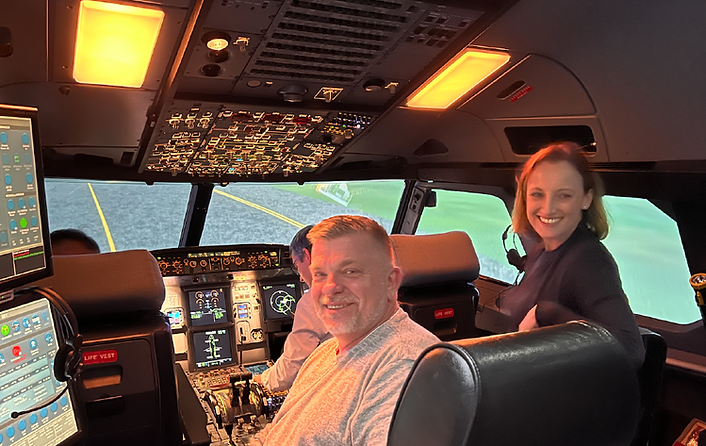

The course is generally divided into three distinct phases spanning approximately 3 days in classroom on site, 1-2 weeks at home at own self-study pace and requiring 4 single days or in a row to complete the minimum of four simulator sessions plus 1 optional day of landing training or LIFUS training for TRI (LT) or TRI (LIFUS privileges)
Phase 01
Teaching & Learning (Core course) classroom (Theoretical part)
-
Duration: ~25 hours in 3 days.
-
Content:
-
The learning process and psychology of learning.
-
Instructional techniques (Briefing, Debriefing, and Critiquing).
-
Human Performance and Limitations relevant to flight instruction.
-
Threat and Error Management (TEM) and Crew Resource Management (CRM).
-
Only at Jetline Training we will emphasize most advanced Training philosophies and student evaluation/assessment techniques as per newest ICAO / EASA Knowledge, Skills and Attitude standards (Observable behaviors (OB's) and Instructor, Evaluator competencies (IEC))
Phase 03
Simulator Training (Practical part)
-
Duration: 12 hours in a Level D Full Flight Simulator (FFS).
-
Content:
-
IOS Advanced Training: Learning to operate the Instructor Operating Station (weather, malfunctions, repositioning).
-
Non-Standard Seat Familiarization: Flying and instructing from the "wrong" seat (usually the right seat for Captains).
-
Abnormal/Emergency Instruction: Practicing how to induce, manage, and critique student performance during critical failures.
-
Intervention Strategies: When and how to take control or verbally intervene during a student's error.
-
'Simulator Management Strategies'. This will cover the effective use of the 'Freeze' and 'Reposition' functions. A key skill for a TRI is knowing how to pause a session for a 'teachable moment' without disrupting the student's situational awareness or the realism of the simulation.
-
Airbus Specific Focus Areas
-
Airbus Philosophies: Teaching the transition from conventional aircraft to "Protection" logic.
-
Flight Laws: Instructing on Normal, Alternate, and Direct Law and all other fly-by-wire systems.
-
ECAM Management: How to teach disciplined management of electronic centralized aircraft monitoring during emergencies.
-
Automation: Teaching the correct use of FMGS and Flight Guidance modes (Managed vs. Selected) and all other TASE, incl. i.e. the concept of non moving thrust levers.
Boeing Specific Focus Areas Manual Handling: Emphasis on teaching manual flight skills, as the 737 requires significant physical input compared to the A320. FMC/MCP Logic: Teaching the Boeing "Checklist and Memory Item" philosophy. Non-Normal Procedures: Instructing on manual trim, manual gear extension, and the traditional "Annunciator Panel" troubleshooting. Tail Strike Awareness: Specific instructional techniques for the long-fuselage variants (B737-800/900/MAX).
Phase 02
Technical Training online or classroom (Theoretical part)
-
Duration: ~10 hours or more
-
Content:
-
In-depth review of aircraft systems (A320 or B737).
-
Standard Operating Procedures (SOPs) from an instructor’s perspective.
-
Review of Flight Crew Operating Manuals (FCOM) and Quick Reference Handbooks (QRH).
-
Instructional techniques & "Long Briefings" on specific maneuvers (e.g., Engine Failure on Take-off).
-
Training areas of special emphasis (TASE) as per aircraft manufacturer OSD, DR IOS Basic Training: Learning to operate the Instructor Operating Station (weather, malfunctions, repositioning).
Phase 04
Assessment of Competence with Examiner
Upon completion of the training, the candidate must pass a practical Assessment of Competence conducted by a Type Rating Examiner (TRE).
This involves:
-
Briefing: Conducting a pre-flight briefing for a specific training session.
-
FFS Session: Acting as the instructor for a crew while being observed by the TRE.
-
Debriefing: Providing a structured, constructive debrief to the "students" including grading.
The assessment of competence can also be performed as flight training on the aeroplane. It is intended to give the TRI(LT) student take off and landing experience on the aeroplane and: Gaining experience and Instructional skills in providing flight training on the aeroplane Control of the aeroplane at all times in such manner that the successful outcome of a procedure or manoeuvre is never in doubt. Landing training including touch-and-go and go-around procedures in role play.


Next course dates
Start online anytime now
1 / Next Online Teaching and Learning course Date
Location: Online at home, start anytime
Start your T&L course phase self-study CBT in LMS and homework now.
2 / Next Teaching and Learning course Date
Location: Zürich Airport
Three days from Monday 8. June to Wednesday 10. June 2026
Earlier or other course Dates available on request and can be arranged anytime.
3 / Simulator Training Phase
Dates on request upon mutual agreement.
At Jetline Training we are the sole ATO to adapt our training dates to your private or work roster.
Why Jetline Training?
PERSONAL MENTOR
Each student is assigned to a personal mentor, who facilitates their entire studying process.
Quality and Passion
Fully standardized, highly competent airline instructors with years of experience in the airline sector, currently employed as airline Captains.
FLEXIBILITY
Jetline is fully flexible in terms of training location and is the sole Academy in Europe which adapts to your private or work obligations or training progress ability. Choose from one of our training centers across Europe that best meets your time and location preferences.
Base Training Guarantee
Jetline is the only ATO in Europe offering base training guarantee within 1 month after passed Assessment of Competence in Simulator.
Not in a hurry? Get your Discount now.